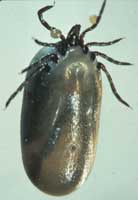
Ticks can be a deadly menace, affecting many different types of pets. Knowing the enemy is the best tool. Below are some of the most common questions asked about tick control.
Can all ticks cause paralysis?
There are two common types of ticks that affect dogs. The less dangerous type is the Brown Dog Tick. It does not cause paralysis but can cause skin irritation and sometimes has other effects.
The Paralysis Tick (Ixodes holocyclus) is the dangerous one, and it’s not always easy to tell the difference between it and other ticks.
When and where is the tick paralysis season?
Paralysis Ticks live mostly on the eastern seaboard of Australia from North Queensland to Northern Victoria. In northern parts of Australia Paralysis Ticks may be found all year round, while in southern areas the season goes from spring through to autumn. Generally, the worst time for tick paralysis is in spring and early summer when it is warm and wet.
Tick cases have been reported in Western Australia, though these are usually dogs and cats that have returned from travel to the eastern states during the paralysis tick season.
Possums and bandicoots are the natural hosts of the paralysis tick. Ticks attach to pets as they walk through grass or bushes where these native fauna have been. This often happens in national parks, suburban parks or even your backyard.
How can I tell if a tick is a Paralysis Tick?
Identifying ticks is not easy and you can’t solely rely on the colour. The legs of the Paralysis Tick are located on the front third of the body, while the Brown Dog Tick has legs positioned around two thirds of its circumference. If you don’t mind looking at its private parts, the Paralysis Tick has a more definite ‘ring’ around its anus whereas the Brown Dog Tick’s equivalent area is less distinct.
What effect does the Paralysis Tick have?
The paralysis caused by the tick mostly starts with an unsteady, staggering gait due to hind limb weakness. The front limbs are affected next and then the throat. Lastly and fatally, the chest is affected.
Dogs also develop a gurgling, choking cough and are unable to bark properly. This is caused by paralysis of the throat, which in turn causes the dangerous effect of saliva being retained in the windpipe.
Immediate treatment is vital. Even dogs that are slightly weak in the hindquarters in the morning can be gravely ill by that evening. Keep your pet cool and calm and arrange transport to your vet as soon as possible. Do not offer your pet food or water.
How can I find ticks on my pet?
It is easier to feel for ticks than to look for them. Mostly, the ticks are found around the head, neck, chest and front legs, but there are many exceptions. Ticks are often hidden under collars, between toes or in other hard-to-reach places, including up noses and in ear canals.
How do I remove a tick?
Research has confirmed that it’s best to get the tick off the pet’s body as soon as possible. It is not advisable to try and kill the tick or harm it whilst it is still attached, as it will inject more of the neurotoxin. Do not use methylated spirits, kerosene, turps or any other chemical agent as they can cause other issues.
A device such as the Tick Twister is designed for safe tick removal and can be purchased from your veterinarian. It is a fork-like device that slides either side of the tick without touching the body of the tick.
How do I remove the head of a tick?
This is a fallacy. Ticks don’t have heads! The concept probably extends from the fact that a dog or cat can become paralysed several hours after a tick has been removed because of the slow spread of the toxin from the skin to the nervous system. Sometimes the mouthparts can be left behind if the tick hasn’t been removed cleanly but the only issue this causes is a local site reaction.
What can I use to prevent ticks on my pet?
There are several ways to minimise tick infestations:
- Chews – Bravecto (every 3 to 4 months) and NexGard, NexGard Spectra or Simparica (monthly) are very convenient ways to protect your dog from ticks and fleas. These should be given to your dog all year.
- Spot-on preparations – Bravecto Spot-On is effective for 6 months on dogs and 3 months on cats. Bravecto Plus Spot-On for cats is effective for 10 weeks. Frontline Plus is effective for ticks on dogs if used every two weeks (not every month as for fleas). Advantix for dogs repels and kills paralysis ticks when applied every 2 weeks.
- Collars – Seresto Flea and Tick Collar (4 months) and Kiltix Flea and Tick Collar (6 weeks) are effective for dogs. Do not use tick collars on cats, or on dogs that like swimming.
- Sprays, shampoos and rinses – For cats and dogs, Frontline Spray is effective if used every three weeks at the tick dose rate of six millilitres per kilogram of weight. Permoxin Insecticidal Spray and Rinse is effective for ticks on dogs. It should be applied as a rinse every seven days. Fido’s Flea Shampoo or Fido’s Fre-Itch Rinse is effective for ticks and fleas on cats or dogs; Fido’s Permethrin Rinse can only be used on dogs. These products are useful when your pet has been in a tick area and you want to bathe it to kill any hitchhiking ticks.
In tick-prone areas, it is essential that your pets are searched daily for ticks. If this is done routinely, you can then eliminate tick paralysis because the tick usually has to be on the animal’s body for 3-5 days to cause paralysis.
Keep your yard free of long grass, fence off compost heaps and heavily mulched areas. Avoid untended parks, especially overgrown shady patches. Keep your dog on leash if bush-walking and keep to clear paths.
Ticks are nasty little vermin. Take no chances. Talk to your veterinarian about an effective tick control programme for your pets.
By Dr Cam Day BVSC
Contributor: Provet Resident Vet
Last updated on 15 November 2019